Web3 Wallet

Web3 Wallet — Momint

Designing an embedded wallet experience that made blockchain asset ownership invisible — removing the technical barrier that was preventing mainstream users from completing their first NFT purchase.

Role Product Manager
Company Momint
Year 2022–2023
Platform Mobile App

Crypto wallets were intimidating. Complex interfaces, unfamiliar terminology, and no clear mental model for users coming from Web2 — particularly first-time digital asset owners who didn't yet trust the space.

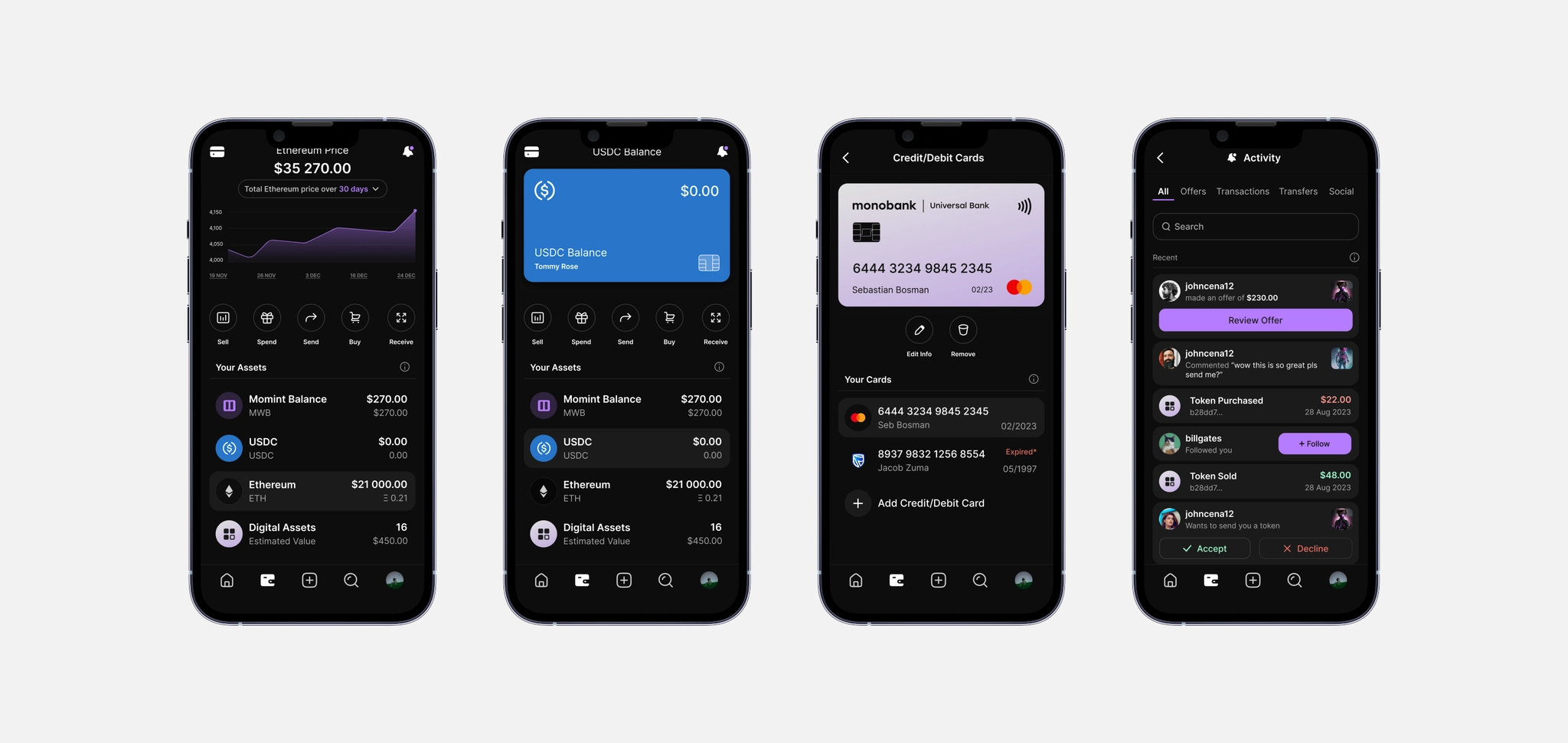
The brief: design an embedded wallet that felt as familiar as a banking app, without stripping out the functionality that experienced users needed.

Product Manager and Design Lead. Research, prioritisation, wireframing, and developer handover.

User interviews across two distinct segments — crypto-native users and first-time digital asset owners. The gap between them was significant. Experienced users wanted speed and control. Newcomers wanted reassurance and simplicity.

Affinity mapping surfaced a clear insight: the terminology and iconography of existing wallets was the primary barrier for new users — not the technology itself. Fixing the language was as important as fixing the interface.

An embedded wallet built around six core MVP features:

View balances and transaction history. Buy and sell crypto via third-party onramps. Send crypto to other Momint users. Spend crypto via third-party API. Receive crypto via scannable QR code. Add and remove fiat cards.

The interface deliberately borrowed patterns from familiar Web2 banking apps — reducing the cognitive leap for newcomers while keeping the full feature set intact for experienced users. Terminology was audited and simplified throughout.

Wireframes iterated rapidly in-house and user-tested at each stage. High-fidelity designs packaged with a full handover document covering design decisions, dependencies, and constraints before engineering began.

The redesigned wallet drove a 25% improvement in month-3 retention — users who engaged with the wallet were significantly more likely to remain active on the platform.